November 20, 2026
In modern manufacturing, precision woodworking, and industrial processing, a factory-standard cutting edge rarely delivers peak efficiency across every application. Off-the-shelf blades and cutters are ground to generalized geometries intended to perform adequately across a broad spectrum of tasks. While a standard bevel may suffice for light, intermittent work, production environments demand far greater accuracy, surface finish quality, and tool longevity. When a cutting edge meets a workpiece, the exact angle of that edge governs how the material shears, compresses, or fractures. Partnering with a specialized tool sharpening service transforms generic tooling into application-specific instruments engineered for maximum performance.
Understanding the Mechanics of Cutting Edge Geometry
To appreciate why custom edge angles matter, it helps to examine the anatomy of a cutting tool. Every blade, end mill, router bit, or industrial knife relies on a balance between sharpness and structural durability. An acute edge angle—such as twenty to twenty-five degrees—slices through soft media with minimal resistance, producing clean surfaces. However, that thin wedge of steel or carbide lacks mass behind the apex, making it vulnerable to chipping, rolling, or rapid wear when it encounters dense or abrasive substances.
Conversely, an obtuse edge angle—ranging from thirty-five to fifty degrees or more—places substantial metal directly behind the cutting tip. This reinforced geometry withstands heavy impact, high heat, and continuous friction without fracturing. The trade-off is increased cutting force, which can crush fibers in softer workpieces or generate excessive heat if the angle is mismatched to the substrate. A professional tool sharpening service evaluates rake angles, relief angles, primary bevels, and micro-bevels to calibrate the exact balance between effortless shearing and edge retention.
Adapting Edge Angles for Hardwood and Softwood Processing
Woodworking and lumber operations illustrate the dramatic difference custom geometry makes within a single material family. Softwoods like pine and cedar feature long, flexible fibers that tend to tear or fuzz when struck by a blunt or overly steep bevel. To achieve glass-smooth planing and crisp joinery in softwoods, technicians grind steeper hook angles and sharper, more acute bevels that sever fibers cleanly before they can bend away.
Dense domestic and exotic hardwoods—such as hard maple, white oak, and hickory—present entirely different challenges. These species contain tightly packed grain structures and, in many tropical varieties, microscopic silica deposits that act like sandpaper on steel and carbide. An acute edge calibrated for pine will quickly chip or dull when driven through kiln-dried maple. Technicians counter this by introducing a slightly more obtuse bevel or honing a subtle micro-bevel along the cutting edge. This adjustment strengthens the apex against brittle fracture while preserving enough keenness to prevent burning or glazing the wood surface.
Engineering Edge Geometry for Non-Ferrous Metals and Plastics
Non-ferrous metals such as aluminum, brass, copper, and bronze require specialized attention during regrinding because of their thermal conductivity and tendency to adhere to cutting surfaces. Aluminum, in particular, is gummy and prone to built-up edge, where softened metal welds itself onto the tool tip and ruins dimensional tolerances. To combat this, a tool sharpening service grinds high positive rake angles paired with polished flutes and sharp primary bevels. This geometry encourages smooth chip evacuation, directing heat away from the workpiece and preventing material from clinging to the blade.
Industrial plastics, acrylics, and composites introduce another set of thermal and structural variables. Thermoplastics like polycarbonate, ABS, and HDPE can melt, smear, or chip if subjected to excessive friction. If a blade edge is too obtuse, it rubs rather than slices, generating localized heat that fuses chips back onto the cut edge. Conversely, brittle plastics like cast acrylic will craze or shatter if a tool grabs too aggressively. Custom grinding solves both issues by tailoring rake angles to shear polymers cleanly at lower temperatures, yielding optical-grade edges without secondary finishing.
Reinforcing Cutting Edges for Ferrous Alloys and Tough Composites
When operations shift to carbon steel, stainless steel, cast iron, and aerospace alloys, cutting forces and temperatures escalate dramatically. Ferrous metals work-harden rapidly if a cutter rubs instead of cutting cleanly, destroying tools within seconds. Furthermore, the sheer density of these alloys places immense mechanical shock on the cutting edge upon entry. In these high-stress environments, a tool sharpening service avoids delicate, acute angles in favor of robust geometries featuring reduced positive or even negative rake angles, reinforced land widths, and honed edge preparations.
Carbon fiber and fiberglass composites are equally unforgiving, though for different reasons. Rather than generating high mechanical shock, these materials are fiercely abrasive, wearing down standard edges faster while delaminating if the cutting action pulls rather than shears the fibers. Custom grinding for composites involves carefully controlled relief angles and specialized wheel selection to produce crisp, burr-free edges on solid carbide or polycrystalline diamond tooling, preventing fiber pullout and extending run times between tool changes.
Leveraging Precision Grinding Technology for Consistent Results
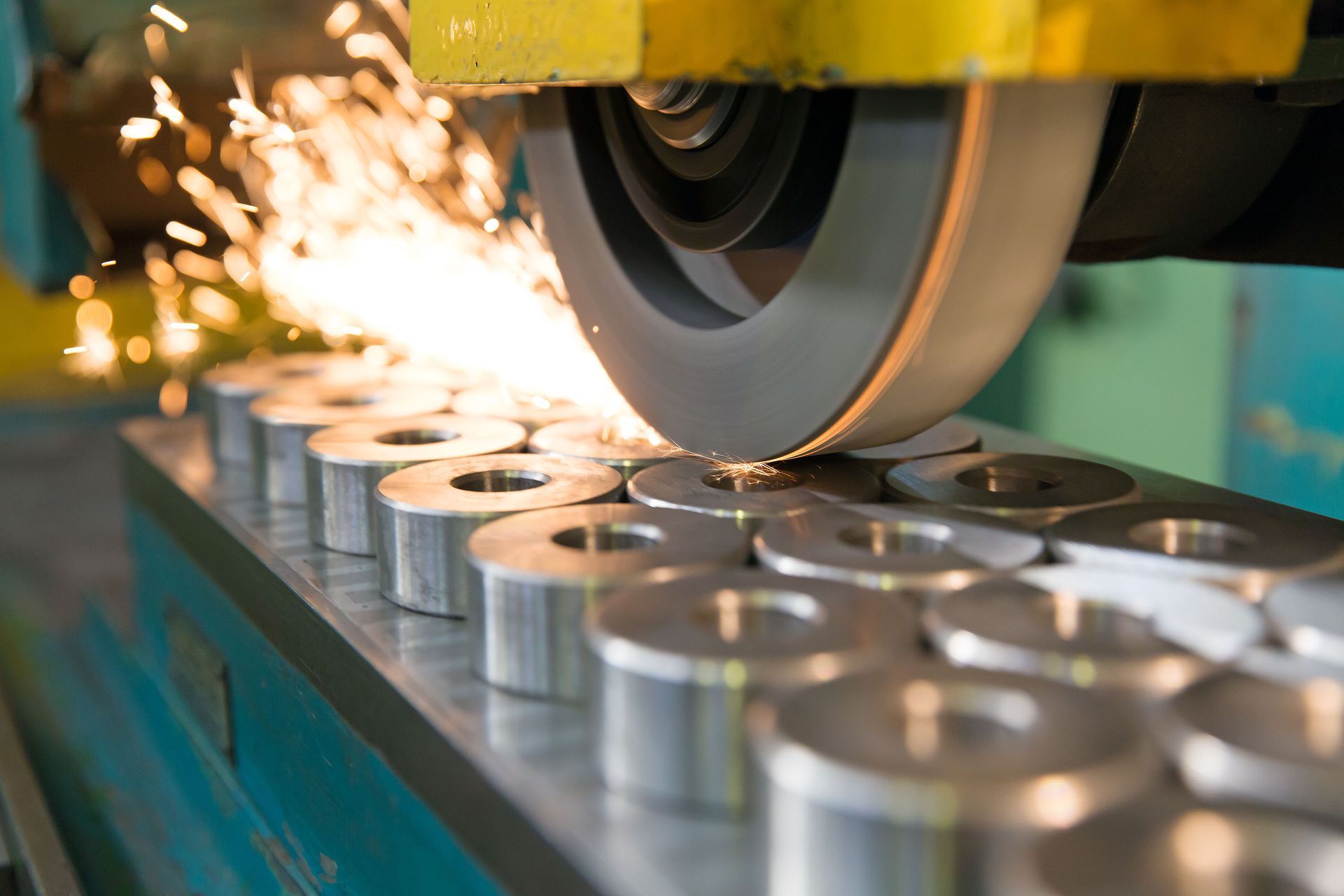
Achieving repeatable, micron-level accuracy across complex tool geometries requires far more than manual touch-up work. Modern precision grinding combines multi-axis CNC grinding centers, optical comparators, and specialized abrasive wheels—such as cubic boron nitride and diamond—to restore and modify cutting tools to exact specifications. According to Industry Research, grinding applications account for approximately 23% of the total cutting tool market. This substantial share reflects how deeply manufacturing and fabrication sectors rely on precision grinding to maintain tight tolerances, maximize tool life, and control production costs.
During a custom regrind, technicians strip away fatigued metal from the worn edge, re-establish concentricity, and apply the exact primary and secondary angles specified for the customer's material. Unlike factory production runs that prioritize speed and universal geometry, an experienced tool sharpening service inspects each tool for micro-fractures, runout, and wear patterns before selecting the optimal wheel grit and coolant flow. This meticulous process prevents thermal damage during grinding, ensuring the metallurgical integrity of the blade remains completely intact.
Maximizing Operational Efficiency Through Custom Tooling Programs
Investing in tailored edge angles delivers measurable returns across the entire production floor. When blades and cutters match the exact mechanical properties of the stock being processed, machines run quieter, draw less amperage, and experience reduced spindle bearing wear. Operators spend less time adjusting feed rates to compensate for chatter, tear-out, or burrs, and secondary deburring or sanding steps are frequently eliminated.
Beyond immediate cut quality, custom sharpening dramatically extends the total lifespan of expensive tooling. Instead of discarding worn cutters or forcing dull blades through demanding materials until catastrophic failure occurs, facilities can establish scheduled regrind cycles with a dedicated tool sharpening service. Each tool can be restored multiple times to its optimized geometry, reducing new tooling inventory expenses while maintaining predictable, repeatable output from the first cut to the last.
Selecting the right edge angle is never guesswork; it is an exact science rooted in metallurgy, material behavior, and precision grinding. Whether your shop processes delicate softwoods, abrasive composites, gummy aluminum, or hardened steels, tailoring your cutting tools to the task at hand unlocks cleaner finishes, faster cycle times, and significantly longer tool life. If you are ready to eliminate premature tool wear and elevate the quality of every cut, reach out to Bob's Cutter Grinding Service today to discuss your specific material challenges and schedule a custom sharpening consultation. Our expert team cannot wait to assist you, so call us today!